Showing posts with label health. Show all posts

Friday, June 22, 2012

Bangkok launches witty anti-smoking campaign

Thailand is currently running an anti-smoking campaign that employs kids in "tricking" adults to quit the habit, appealing to emotion while rightfully passing on the message of smoking's health risks.

The "Smoking Kid" campaign, created by Ogilvy Asia, is now gaining attention online with its YouTube video reaching more than 740,000 hits.

The video features a child casually approaching an adult (apparently an office employee) on a cigarette break having the following conversation:
Boy: "Can I get a light?"
Adult: "Don't you want to live and play?"

The conversation is then followed by the handing of a brochure that bears the message: "You worry about me. But why nor about yourself?"

Watch the video:

Saturday, May 12, 2012

Not just green tea: green coffee beans may also aid weight loss

Coffee beans that have not undergone roasting may
help in losing weight (image source: topnews.in)  
A small study presented at the May 8 national meeting of the American Chemical Society showed weight loss promise in green coffee bean extract. This introduces another cheap alternative for reducing pounds though it may literally be bitterer than the regular weight loss bitter pill.

Joe Vinson, a University of Scranton chemist, conducted the pilot study on the effectiveness of natural and uncooked/unheated coffee beans for improving weight loss success. The study involved 16 overweight young adults who undertook a "cross-over" design of testing the effects of green coffee beans. This setup makes the participants their own benchmark wherein they took, by turns, a low dose of unroasted coffee bean extract, a high dose of the coffee bean supplement, and a placebo.

The results were promising with an average of 17.5 pounds weight reduction after five months and two weeks or an overall weight loss of 10.5%. A bigger study is already being planned, calling for 44 additional participants (a total of 60).

Vinson says that the apparent reason for such weight reduction is the ability of green coffee bean extract to diminish fat and glucose absorption in the gut. It is also possible that the extract is able to reduce insulin levels to enhance metabolism. No adverse effects from the coffee extract have been observed among the study participants.

As earlier mentioned, the study is non-conclusive and it requires further investigations and a bigger participant population. Several health scientists have expressed their apprehension over the findings saying that the chemical content of coffee beans both have positive and negative results. It is up to additional studies to prove that the positive effects can outweigh the negative.

Tuesday, May 8, 2012

A scientific explanation on the natural tendency to brag

Ever wondered why there seems to be an innate inclination to brag‽ Science has an answer.

A study performed by Harvard University neuroscientists led to the finding that talking about oneself to other people (in person or through indirect means such as social media and blogs) triggers sensations similar to those caused by food or money. Parts of the brain associated with pleasure were found to be activated when a person talks about himself or herself (self disclosure) especially with the mention of pleasant or enviable things.

The Harvard researchers conducted laboratory tests wherein they monitored the brain activity of volunteers to determine the parts of the brain that get stimulated when a person experiences pleasure or happiness. The volunteers involved in the study were mostly Americans residing near the university. A functional magnetic resonance imaging scanner was used to monitor brain activity during the tests conducted.

The general observation derived from the tests was that there were spurts of increased activity in regions of the brain that belong to the meso-limbic dopamine system. Activity in these regions are associated with the feeling of satisfaction and gratification derived from the enjoyment of food, sex, or money.

Thursday, July 14, 2011

Study: Tea and coffee drinkers less prone to MSRA infection


A recent government study involving 5,500 Americans finds an additional benefit in drinking hot coffee or tea: warding off methicillin-resistant Staphylococcus aureus or MRSA.

The study was published in the Annals of Family Medicine and accordingly, the popular caffeinated beverages make drinkers less likely to have methicillin-resistant Staphylococcus aureus or MRSA in their nostrils. Hot tea and coffee have antimicrobial properties that play a big role here, offering the protection that non-drinkers don't have as they are found to be about twice more likely to be carrying MRSA in their noses.

Approximately 2.5 million people are nasal carriers of MRSA and in general about one percent of the United States population carry the microorganism in their nose or skin. Not all carriers suffer from MRSA caused sicknesses though.

Methicillin-resistant Staphylococcus aureus or MRSA is a bacterium identified to be responsible for various difficult-to-treat infections in humans. It is also known as multidrug-resistant Staphylococcus aureus or oxacillin-resistant Staphylococcus aureus (ORSA). Technically, MRSA refers to an strain of Staphylococcus aureus that has developed resistance to beta-lactam antibiotics such as penicillin and the cephalosporins.

Sunday, March 30, 2008

Singulair linked to serious mood and behavior issues

singulair and risk of suicideUnited States' Food and Drug Administration (FDA) has announced that it is evaluating available information for a potential link between some serious issues involving mood changes and behavior affecting patients who take Merck & Co, Inc's Singulair (montelukast).

Singulair is a prescription drug for the treatment of asthma, allergic rhinitis, and the prevention of exercise-induced asthma. Accordingly, it has been associated with unlikely mood changes, suicidal thinking and behavior (suicidality), and suicide. Merck & Co, Inc has made several changes to the patient and prescriber information issued for Singulair and has worked with the FDA to determine how to communicate the latest changes in the most effective manner.
Updates on the drug include alerts for adverse reactions and recently has included tremor, depression, suicidality, and anxiousness. Plans to increase awareness of these potential side effects include personal interaction with prescribers and information leaflets for patients. Merck is conducting a re-evaluation study for Singulair and the FDA is reviewing patient reports of adverse reactions while taking Singulair. The FDA anticipates the review and evaluation process may take as long as nine months before firm data is available for public release.
Singulair is a leukotriene receptor antagonist with mechanism of action similar to Accolate (zafirlukast). Another popular drug used for the treatment of similar symptoms is Zyflo/Zyflo CR (zafirlukast), which is a leukotriene synthesis inhibitor. The FDA is also reviewing reports of similar adverse reactions reported in patients taking these medications to determine if further investigation should be made.
Patients and physicians are requested to report any incidence of these adverse reactions while taking any of these drugs. The FDA has a program for reporting adverse reactions, the MedWatch Adverse Event Reporting program, that can be accessed by:
going online to www.fda.gov/medwatch/report.htm,
by calling 1-800-332-1088, or
by faxing to 1-800-FDA-1078.
Source: FDA

Tuesday, March 4, 2008

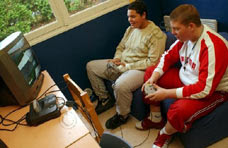
Less computer gaming and television is slimming option for kids

A University at Buffalo study reveals that blocking access to television or the computer helps young overweight children in eating less and losing weight.

In the United States, approximately 16% of children aged 6 to 19 are overweight, a 45% increase over one decade. This new finding might just help solve America's growing problem of obesity.

Watching TV has been linked to obesity in previous studies, but the University at Buffalo research is the first to show significant weight loss in children whose TV and computer time had been reduced.

“Television viewing is related to consumption of fast food and foods and beverages that are advertised on television. Viewing cartoons with embedded food commercials can increase choice of the advertised item in preschoolers, and television commercials may prompt eating,” study authors said in a prepared statement.

The two-year research involved 70 children between four and seven years old who regularly watched TV or played computer games for at least 14 hours a week. All the selected children were in the heaviest quarter of their age group on the body mass index, or BMI.

During the study, half the group were allowed to continue in their old habits, while the other half were made to reduce their TV and computer habits by 50 percent. The researchers attached an electronic device called the TV Allowance (costing $100), made by Mindmaster Inc., to the children's televisions and computers. The TV or computer would not work after some configured amount of time.

The study results were impressive.

At the end of the study, 30% of kids (whose TV time was restricted) went from overweight to not being overweight. Only 18 percent had weight improvement (in this case, weight loss) in the control group.

The study also showed that the TV Allowance device also helps parents who cannot control their children while they are at work.

The researchers concluded: “Using technology to modify television viewing eliminates parental vigilance needed to enforce family rules and reduces the disciplinary action needed if a child exceeds his or her sedentary behavior limits. Perhaps most important, the device puts the choice of when to watch television in the child's control, as opposed to a rule such as ‘no television time until homework is completed,’”

The American Academy of Pediatrics says that children aged two and older should only have not more than two hours of television or computer time everyday. The younger ones should have none. In reality, this is not the case. Children usually spend 50% or more time than recommended in front of their computer or TV sets.

Sunday, March 2, 2008

Bacteria as snow nuclei

Bacteria, oftentimes, are at the core of snowflakes.

Moisture needs something to cling to in order to condense into snow and rain. Scientists--however--were surprised to find out how frequently that something is bacteria.

A study published Friday in the journal Science reveals that a large share of those so-called nucleators turn out to be bacteria that can affect plants.

"Bacteria are by far the most active ice nuclei in nature," said Brent C. Christner, an assistant professor of biological sciences at Louisiana State University.

Christner and colleagues studied snow samples from Antarctica, France, Montana, and Canada's Yukon and found that as much as 85% of the nuclei were bacteria. The bacteria finding was most common in France, followed by Montana and the Yukon, and was even present in Antarctica.

Pseudomonas syringae were the most typical bacteria observed. These bacteria can cause diseases in several types of plants including tomatoes and beans.

Christner said that in the past, scientists have tried to eliminate Pseudomonas. After learning that these bacteria turn out to be a major factor in encouraging snow and rain, he wonders if that is a good idea. Eliminating the bacteria might result in less rain or snow. There must be some substitute first before doing such alteration of nature.

Vit E supplements and lung cancer

Vitamin E can increase the risk of developing lung cancer according to a study published in the March issue of the American Thoracic Society’s American Journal of Respiratory and Critical Care Medicine.

The Washington State Vitamins and Lifestyle study involved data on 77,126 men and women between the ages 50 and 76 from the , spanning over four years. The surprising raised risk level equaled seven percent for every 100 mg a day of Vitamin E supplement taken.

“In contrast to the often assumed benefits or at least lack of harm, supplemental vitamin E was associated with a small increased risk of lung cancer,” according to Dr. Christopher G. Slatore, M.D., of the University of Washington in Seattle.

This study may strengthen the notion that nothing beats nutrients from real fruits and vegetables. The use of vitamin supplements as fruit and vegetable substitutes has long been controversial due to the fact that these supplements contain not only vitamins, but also phytochemical compounds and other components. “Future studies may focus on other components of fruits and vegetables that may explain the decreased risk [of cancer] that has been associated with fruits and vegetables,” said Dr. Slatore.

Monday, February 25, 2008

Techno and gadget addiction

UK researchers warn about growing tech addiction. Techno and gadget addiction can become too distracting that one has to wake up several times at night or skip work just to check emails and text messages.

Professor Nada Kakabadse of Northampton University says it can even interfere with an "addict's"job as he feels he has to be linked up all the time.

Professor Kakabadse together with her team is conducting research on how widespread the addiction can be. A small-scale study of 360 people suggested that up to a third were addicted to their gadgets or tech items.

Kakabadse says: "People could become addicted to just about anything."

"We are creatures of habit and we can get addicted to quite unusual things.

"Technology has become much more interesting over the past 10 years with the internet and everything.

"It is much simpler and much more portable which makes it more accessible.

"You would be surprised how many people had their PDA or Blackberry next to their bed heads."

"Those who are addicted will get up in the middle of the night and pick up messages on their PDAs two or three times a night."

It was found that the addiction could lead to relationships problems as the "addict" became more and more withdrawn from their families. Other negative social consequences also include anxieties and sickness.

The conducted research suggested that in the early stages of addiction, workers were often very productive, replying to e-mails and messages, but as time went on there were more serious consequences. Professor Kakabadse says some people are very anxious not having their gadgets next to them and it was often difficult to detect when someone had become an addict.

Somehow implied in the research is a call to put warnings to on all gadgets. Professor Kakabadse adds that employers should provide training on the safe use of technological devices they provide their staff.

Tuesday, February 12, 2008

Diet soda may not be a dieting option after all

A new study reveals that calorie-conscious consumers who go for diet sodas may gain more weight than if they were to consume sugary drinks. The culprit: artificial sweeteners.

Casting doubt on the benefits of low-calorie sweeteners, a Purdue University study released Sunday in the Behavioral Neuroscience journal reported that rats on diets containing the artificial sweetener saccharin gained more weight than rats given sugary food.

The study hints at the idea that artificial sweeteners alter a person's metabolism.

In the Purdue study, the rats whose diets contained artificial sweeteners appeared to experience a physiological connection between sweet tastes and calories, which drove them to overeat. The "mismatch" in caloric number and sweet taste seems to change the brain's chemistry. It seems typically with sweet foods that metabolism revs up.

Diet soft drinks is the second-most-popular low-calorie, sugar-free products in the United States according to a consumer survey from the Calorie Control Council. This recent study would definitely come as a surprie to the 59% of Americans who consume diet soft drinks.

Though further research needs or need to be undertaken, it is advisable for consumers to lessen consumption of artificially sweetened food and beverages. The Purdue study definitely goes beyond the diet soda connection.

Wednesday, February 6, 2008

Japanese study finds no link between cancer and mobile phone use

Japanese scientists find no evidence to support the relationship between cerebral cancer risk and the use of mobile phones.

In a study published on Tuesday in the British Journal of Cancer, researchers led by Naohito Yamaguchi compared the history of mobile phone use in 322 brain cancer patients with 683 healthy people living in Tokyo.

"We studied the radiation emitted from various types of mobile phones and placed them into one of four categories relating to radiation strength," said Yamaguchi.

"We then analyzed how they would affect different areas of the brain, taking into account the organ's complex structure."

Yamaguchi adds that using their newly developed and more accurate techniques, there was found no association between mobile phone use and cancer, contending earlier studies that suggest boosted brain cancer risk with regular cell phone use.

Previous studies into mobile phone use have thrown up conflicting findings. The biggest investigation, which covered 420,000 people and spanned (in some cases) more than a decade of phone use, failed to find a cancer connection.

Yamaguchi's team, from the Tokyo Women's Medical University, examined patients with three types of brain cancer -- glioma, meningioma and pituitary adenoma (cases that comprise approximately 85 percent of all brain tumors.)

Several countries have guidelines such as advising the public to make shorter calls on mobile phones, use hands-free sets and let children only make essential calls in order to limit exposure to electromagnetic energy.

Monday, February 4, 2008

Introducing...Vitamin Beer

A Filipino concocts a Vitamin B enriched beer that took center stage during the gathering of members of the International Federation of Inventors Association in Bangkok, Thailand.

Filipino inventor, Billy Malang, created a healthy beer that was sure to draw a crowd. A previous study has found health benefits in beer and this new development serves "another reason to drink."

Malang says: "All clear beers have no vitamins. It (sic) just contains alcohol, which is converted to sugar which gives you a big tummy, called the beer belly. So I brought back the Vitamin B to make beer a healthier habit."

Malang was one of the inventors from 27 countries who featured more than new 150 inventions in the Bangkok gathering. Other inventions featured include chopsticks that double as a toothbrush and a hi-tech sandwich filling machine.

Vitamin Beer

A Filipino concocts a Vitamin B enriched beer that took center stage during the gathering of members of the International Federation of Inventors Association in Bangkok, Thailand.

Filipino inventor, Billy Malang, created a healthy beer that was sure to draw a crowd. A previous study has found health benefits in beer and this new development serves "another reason to drink."

Malang says: "All clear beers have no vitamins. It (sic) just contains alcohol, which is converted to sugar which gives you a big tummy, called the beer belly. So I brought back the Vitamin B to make beer a healthier habit."

Malang was one of the inventors from 27 countries who featured more than new 150 inventions in the Bangkok gathering. Other inventions featured include chopsticks that double as a toothbrush and a hi-tech sandwich filling machine.

Sunday, February 3, 2008

No double dipping please

Is there any risk associated with sticking a piece of partially eaten food into a dip or salsa?

Researchers from Clemson University say yes based on a study conducted by measuring the amount of bacteria in a dip that came from the mouths of study participants.

The participants were asked to take a bite out of a cracker that they had just scooped up with dip. After performing the double dip eight times, the study found that the a few extra ingredients in the dip - unwanted and unhealthy ingredients.

"Yes, you have a lot of bacteria on your skin and more in your mouth," said Joanne Konschak, director of infectious disease control of South Jersey Healthcare. "(For most bacteria) the dip becomes a breeding ground they can use to feed off."

Friday, February 1, 2008

Jump for temporary clogged nose relief

Whenever the cold hits me and that annoying clogged nose part starts to set it, I jump.

Frantically, I jump.

I jump and hop till I get that temporary clogged nose relief. After feeling an increase in heartbeat and breathing rate, nasal passages start clearing up. Breathing becomes easier though there could be some panting. I start feeling a bit comfortable..

I don't have scientific explanations yet but the jump technique really works for me.

Monday, January 21, 2008

Cold treatments that do and don't work

Tis the season of sneezing...

Here are some information and insights useful when dealing with colds or flu.

What works
Catching a cold means getting sick for about a week. That's miserable but the following remedies may help:
  • Water and other fluids. Water, juice, clear broth, or warm lemon water with honey are some of the fluids that loosen congestion and prevent dehydration. Alcohol, coffee, and caffeinated sodas should be avoided.
  • Salt water. Mix 1/2 teaspoon salt in 8-ounces of warm water and use it as a gargle to temporarily relieve a sore or scratchy throat.
  • Saline nasal sprays. Good for addressing stuffiness and congestion, saline sprays are advisable as they don't lead to a rebound effect - a worsening of symptoms when the medication is discontinued. Saline nasal sprays are also safe for children.
  • Chicken soup. Scientists have found that chicken soup helps relieve cold and flu symptoms in a couple of ways. It acts as an anti-inflammatory by inhibiting the movement of the immune system cells that participate in the body's inflammatory response. It also temporarily speeds up the movement of mucus through the nose. Fast mucus movement helps relieve congestion and limits the amount of time viruses are in contact with the nose lining. The effects immaterially vary in canned or homemade soups.
  • Over-the-counter cold medications. The common resort is of course an effective one but one should be careful with side effects and dosage.
  • Humidity. Humidifiers can add home moisture and help prevent opportunities for cold viruses to proliferate. Not cleaned properly though, they facilitate fungal and mold thriving.

What don't work

There are several ineffective cold remedies and some of the more common ones are listed below.

  • Antibiotics. Antibiotics are for bacteria. Colds are caused by viruses. Viruses are not bacteria.
  • Antihistamines. The do well preventing your runny nose, watery eyes, or sneezing. But basically, they are intended for allergies. They're no help in addressing colds.
  • Over-the-counter (OTC) cough syrups. The American College of Chest Physicians discourages the use of OTC cough syrups especially for children below age 14.
  • Not eating. A "folklore," reducing or abstaining from food intake does nothing to reduce symptoms or sickness.

What probably won't hurt

In spite of ongoing studies, the scientific jury is still out on popular cold remedies such as vitamin C, echinacea and zinc. Here's an update on some common alternative remedies:
  • Vitamin C. Vitamin C doesn't appear to prevent colds in most people, but taking large doses - up to 5,000 milligrams - at the beginning of a cold may reduce the severity of symptoms. Lower doses - 200 to 300 milligrams - may shorten a cold's duration. Just what constitutes an optimum dose isn't clear, but amounts in excess of 2,000 milligrams a day may cause nausea and diarrhea.
  • Echinacea. A National Center for Complementary and Alternative Medicine study released in 2005 found that echinacea did little to prevent or shorten colds. But testing herbs is difficult, and scientists say more research is necessary. Some people swear by Airborne, an herbal cold remedy that's sold over the counter in many drugstores.
  • Zinc. The cold-fighting reputation of zinc has had its ups and downs. That's because many zinc studies - both those that find the mineral beneficial and those that do not - are flawed. In studies with positive results, zinc seemed most effective taken as a lozenge or nasal spray within 24 hours of the onset of symptoms. Taking zinc with food reduced side effects, including a bad taste and nausea.

Avoiding colds

Rhinoviruses are the typical causes of colds. They spread through the air through coughing or sneezing (of someone infected). Infection can go through the mouth, eyes, and nose. Colds aren't inevitable though. Viruses linger on surfaces for up to 48 hours but washing for at least 15 seconds with ordinary soap and water or with an alcohol-based sanitizer destroys most of these viruses. The following definitely help.

  • Use a paper towel rather than a cloth one to dry hands.
  • Avoid people who are sick whenever possible, and stay home if you're sick yourself.
  • Avoid sharing dishes, towels or silverware.
  • Observe cleanliness.
  • Manage stress as this lowers immunity and increases susceptibility to illnesses.
  • Exercise and take a healthful diet to boost immunity.

Thursday, January 17, 2008

Unfavorable drug studies hardly make it on print

Researchers from the Oregon Health & Science University report that nearly a third of antidepressant drug studies are never published in the medical literature and nearly all happen to show that the drug being tested did not work. Worse, unfavorable results have been recast to make the medicine appear more effective than it really is.

This selective publication issue raises the problem of doctors being unable to make appropriate prescribing decisions. It does not serve the best interest of patients or the public health.

From Yahoo News:
"Not only were positive results more likely to be published, but studies that were not positive, in our opinion, were often published in a way that conveyed a positive outcome," said the authors.
For example, of the seven negative studies done on GlaxoSmithKline's Paxil, five were never published. The researchers found three studies for GSK's Wellbutrin SR, but the two negative ones never reached print.
There were five studies for Pfizer's Zoloft, but the three showing the drug to be ineffective were not published. A fourth study, ruled questionable by the FDA, was written and published to make it appear that the drug worked.
A Glaxo spokeswoman said the company posts the data from all of its trials, positive or negative, on the Internet.
"GlaxoSmithKline agrees that public disclosure of clinical trial results for marketed medicines is essential and fully supports registration of all trials in progress," she said.
"Pfizer is committed to the communication of results of all registered clinical studies, regardless of outcome. More specifically, we have committed to disclose clinical trial results within one year after study completion for all of our marketed products," Pfizer spokesman Jack Cox said in an e-mail.
Turner and his colleagues did not find out who was to blame for not publishing the studies. He said medical journals may have played a role by deciding they would rather publish favorable results.
"There's an expectation that if you get a positive result, that's what you're supposed to do, and if you get a negative result you have failed," said Turner. "The first impulse is to say, 'I was wrong. Maybe I should move on to something more interesting"' so the results may never get written up.

Monday, January 14, 2008

Breast cancer taste test

Women may just have to bid mammography goodbye with a smile. Enough of the painful process and hello to dental/oral breast cancer detection.

A Cancer Investigation journal article reports that a U.S. team has found that women with breast cancer secrete particular proteins into the saliva that can be picked up by a test.

Houston, Texas based researchers analyzed samples from 30 patients and found 49 proteins that distinguished those who were healthy from those who had breast cancer tumors. The proteins could also distinguish between tumors that are benign and malignant.

Of the 30 participants in the research, only 10 had cancer. This is good news but researchers say there's still a need for further investigations and evidences.

Chew gum and lose weight...unhealthily

Sorbitol, an artificial sweetener used in chewing gums, can cause diarrhea that leads to potentially dangerous weight loss.

Two cases in Germany link diarrhea to sorbitol. A 21-year-old woman suffered diarrhea that caused her to lose about 24 pounds and a 46-year-man lost approximately 46 pounds because of diarrhea. Doctors were clueless about the disorder and dramatic weight loss despite having conducted several laboratory tests on the patients. Not until they learned about the patients' chewing habits.

Both patients were found to consume excessive sorbitol through their chewing gums. The woman chewed 15 to 20 sticks a day, containing up to 20 grams of the sweetener, while the man consumed up to 200 grams of sorbitol a day through 20 sticks of gum.

The U.S. Food and Drug Administration says diarrhea risk associated with sorbitol comes at the threshold of 50 grams daily intake.

So that's it. Chew sorbitol-rich gum daily, have diarrhea, and lose weight.

New targets in disrupting HIV lifecycle

273 proteins have been identified to be vital components in the reproduction of the virus that causes AIDS according to a recent study lead authored by Stephen Elledge of Harvard Medical School and published online in SciencExpress.


This discovery paves the way for building insights on how the virus actually functions, and subsequently on finding a way to circumvent the HIV lifecycle.


It is known that HIV contains little genetic material of its own and that it only hijacks a host cell's genetic code to reproduce. This new study identifies some of the cell proteins the virus uses in that process.


According to Elledge, current anti-AIDS drugs generally focus on the virus itself and the problem is that HIV is a highly mutable virus, so it can change the target of the drug so that it no longer binds the drug that well. This is the reason Elledge's team focused on human proteins.


Elledge and his colleagues screened thousands of possibilities using RNA interference, a technique honored with a Nobel Prize a year ago, to find the 273 proteins that are part of the HIV life cycle. RNA interference can be used to effectively shut down one gene at a time within a cell. The researchers used RNA interference to determine any effect on HIV growth or reproduction.

This is a welcome development but the researchers warned that there are still uncertainties of creating drugs that would kill HIV using this discovery (i.e. protein inhibition). The identification of the 273 proteins is only a preliminary step to finding cure.